SILICONE ELEMENTS
A world of silicone
Why use silicone?
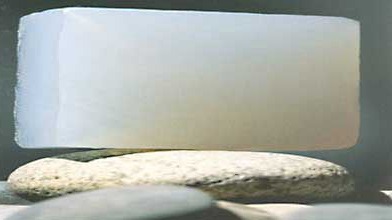
- Because it resists high temperatures (315ºC)
- Because it withstands very low (cryogenic) temperatures (-100ºC)
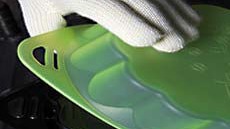
- Because it is certified for food applications
- Because it is suitable for medical applications
- Because it is non-adhesive to adhesives and most materials
- Because it is waterproof and water-repellent
- Because it is fire resistant
- Because it is resistant to chemicals
- Because it does not contain peroxides
- Because it can conduct electricity (semi-conductive silicone)
- Because it is radio opaque
And a long list of other reasons that distinguish this material from any other.
What do we make in silicone?
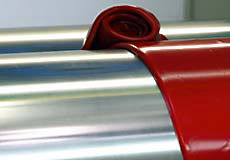
Extrusion of custom-made profiles, tubular, rectangular, square, weatherstrip, solid cylinder. We offer a wide range of shapes (more than 5000 punching tools in stock), as well as the production of new shapes according to customer specifications (drawings or samples) in any quality of silicone or cellular silicone.
Customised production of door frames, window frames, profiles with metal inserts for fastening, machinery seals, inflatable seals.
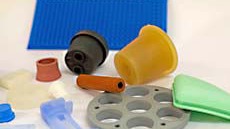
Moulding with metal inserts (aluminium, stainless steel, steel, etc...) overmoulding of parts, customised parts, silicone plates.
Stamping and cutting of washers, sleeves, flat seals, or any seal on plates or extruded bands.
Inflatable seals: seals to guarantee static or dynamic sealing between moving parts that need to be separated or sealed frequently, the use of inflatable seals being the simplest, safest and most efficient alternative. Inflatable seals are inflated and deflated by means of a pneumatic system or process and have been developed for all types of applications that require a high level of sealing.
Industries and sectors of interest for silicone products
Food sector, Railway sector (EN-45545), Pharmaceutical industry, Laboratories, Chemical and Cosmetic sector, Machinery manufacturers.
For more information about our products please visit our partner's website: ProSilicones 64